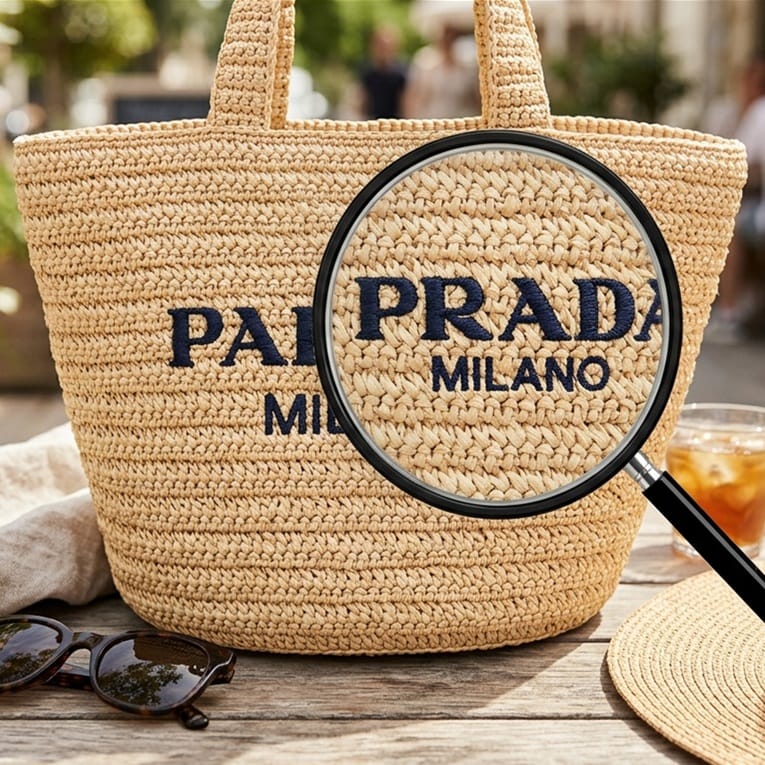





Legitam Insights:
Scale, Psychology, and the Gen-Z Shift

Police officers inspecting a warehouse filled with boxes, illustrating the fight against the counterfeit market and the importance of secure supply chain logistics using RFID.

Over $110 billion
fake items confiscated

With counterfeit items accounting for 8% of global fashion transactions and misleading 20% of consumers, the luxury market faces a systemic erosion of brand equity driven by unverified online trade.

“A major challenge in the luxury fashion market is the proliferation of counterfeit products, which damages brand equity and reduces consumer trust. In 2024, counterfeit luxury goods represented approximately 8% of global fashion transactions, with over $110 billion worth of fake items confiscated in raids globally. Online platforms, especially those lacking robust verification systems, contributed to 65% of these counterfeit transactions. Luxury watchmakers and accessory brands experienced the highest rates of infringement, with 20% of consumers unknowingly purchasing fake items.

56,769 counterfeit accounts
active on Instagram

The staggering 341% surge in counterfeit social media activity demonstrates an aggressively scaling digital threat, where the flood of millions of fake posts and stories per month systematically dilutes the perceived exclusivity and aspirational value of luxury brands.

“In this study we identified 56,769 counterfeit accounts active on Instagram, with a growth of more than 171% when compared to three years ago (20,892 counterfeit accounts).(…)
 In 2016 these counterfeit accounts published a total of 14.5 million posts while in 2019 they published more 64 million posts and an average of over 1.6 million Stories every month – a growth of more than 341% when compared to three years ago.

A woman taking a selfie in front of a luxury pool background, symbolizing the "fake-free" lifestyle and the desire for genuine personal branding with original products.
A group of young people using their smartphones with headphones, demonstrating the intuitive and effortless one-touch authenticity verification process for consumers

50% of GEN-Z agree is acceptable to purchase counterfeit

The normalization of counterfeit luxury among younger demographics, with 50% of 15 to 24 year olds justifying replicas as an acceptable alternative to high-priced originals, poses a systemic threat to the long-term exclusivity and aspirational value of premium brands.

“The degree of acceptance of these reasons varies with age. In general, younger consumers are more likely to be open to justifications for purchasing counterfeit goods, especially in relation to financial arguments. For instance, 50 % of those aged between 15 and 24 agree or tend to agree that it is acceptable to purchase counterfeit products when the price of the original product is too high and 41 % say it is acceptable to buy counterfeit luxury products

Blockchain authentication tools
doesn't work

The persistent growth of high-quality replicas reveals that standard digital safeguards, such as easily duplicated QR codes or complicated and inflexible blockchain-based solutions, remain insufficient to protect brand equity and sustain market expansion, even for the 45% of brands already investing in authentication.

“Despite investment in blockchain and product authentication tools by over 45% of top luxury brands, the continued spread of high-quality replicas poses a restraint on market expansion.” , Market Growth Reports, 2025

A software developer working with complex code on multiple monitors, representing the advanced cryptography and engineering behind the Legitam authenticity platform
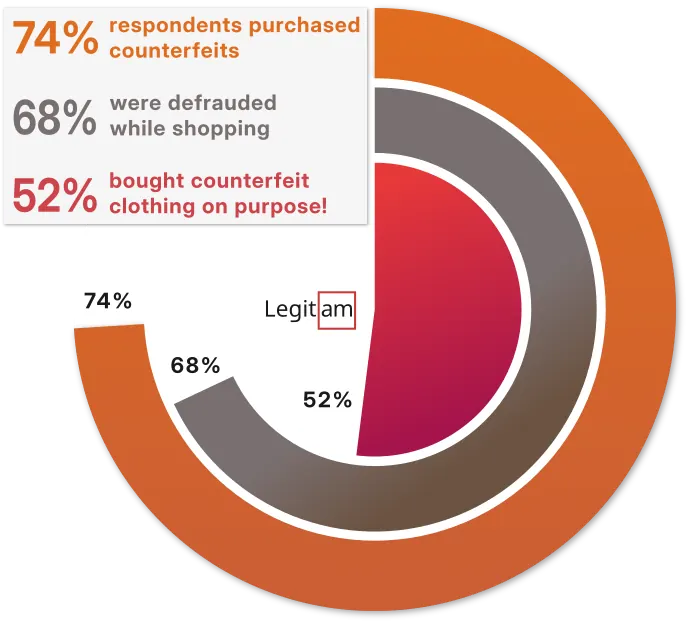
Chart: 52% bought counterfeits knowingly, 68% were deceived into buying counterfeits, 74% purchased counterfeits non-deceptively

52% of customers intentionally bought a fake product.

“Consumers were more likely to have bought counterfeit goods (deceptively and non-deceptively) in the past and have intentions to do it in the future if:
-they had positive attitudes toward counterfeit purchasing
-they believed that their peers in the country, town, or the Internet (distal reference groups), as well as close friends and family (proximal reference groups) accepted this behavior and engaged in it.” (…)

Find out how to combat fakes
Invisible Exclusivity

While price-sensitive consumers often turn to replicas to satisfy a desire for status, this choice is entirely contingent on social invisibility. For these buyers, a counterfeit only holds value as long as its true nature remains hidden from the world.

Inner Circle

The psychological barrier to owning a counterfeit is defined not by the judgment of strangers, but by the scrutiny of those closest to us. The discomfort of exposure occurs only within one’s inner circle and only they are capable of shifting a consumer’s choice toward authenticity to avoid social friction and loss of integrity.

Brand Erosion
When a market is saturated with replicas, the original product’s hallmark of exclusivity begins to fade. As the brand’s identity is diluted, even the most loyal customers lose interest, fearing that their authentic investment will be mistaken for a common counterfeit.
Defensive Consumption
The surging demand for “super-clones” is a strategic defense mechanism. It’s not just about the look; it’s about mitigating “social risk.” Consumers invest in near-identical fakes to shield themselves from the potential shame of public exposure.
More from Legitam Insights:
How to Spot a Fake

How to Spot a Fake

Anatomy of a Counterfeit no 7 How to Spot a Fake A Practical Guide in 4 + 1 Simple Steps 1. Material Nanostructure and Cellular Density Evaluating quality purely “by touch” is a relic of the past – modern synthetics can perfectly mimic the texture of genuine leather. To be certain, you have to go […]

Read more →
The Second Life of Counterfeits

The Second Life of Counterfeits

ow does a $50 replica turn into a $1,500 scam? Explore the secondary counterfeit market, from intentional underground buying to peer-to-peer marketplace fraud, and uncover who truly profits from fake luxury goods.

Read more →

Disclaimer

Anti-Counterfeit & No-Link Policy

Legitam is strictly committed to combating the counterfeit market and protecting intellectual property. Under no circumstances do we provide links, source destinations, or contact information for channels selling counterfeit or unauthorized goods. Our research is strictly analytical and intended solely to educate consumers and brands on authenticity and product security.

Trademark & Non-Affiliation Disclaimer
All product names, logos, brands, and other trademarks featured or referred to within this section (Legitam Insights) are the property of their respective trademark holders. These trademark holders are not affiliated with Legitam, our products, or our website. They do not sponsor, endorse, or express any opinion on our materials, research, or findings. The use of these trademarks is for identification and educational purposes only, constituting nominative fair use under applicable intellectual property laws.
Copyright & Fair Use Notice
This website contains copyrighted material, including images sourced from official manufacturer websites, the use of which has not always been specifically authorized by the copyright owner. We are making such material available for illustrative, comparative, and educational purposes to analyze product authenticity and consumer protection issues. We believe this constitutes a “fair use” / “right of quotation” of any such copyrighted material as provided for in applicable copyright laws. All images retrieved from official sources are credited to their respective owners.
Limitation of Liability & Analytical Opinion

The comparisons, breakdowns, and authenticity analyses published herein represent the independent research, observations, and professional opinions of the Legitam team. While we strive for absolute accuracy using advanced testing methodologies, these findings are provided for informational and educational purposes only and do not constitute an official legal or judicial counterfeit certification.